Greek Fava Beans
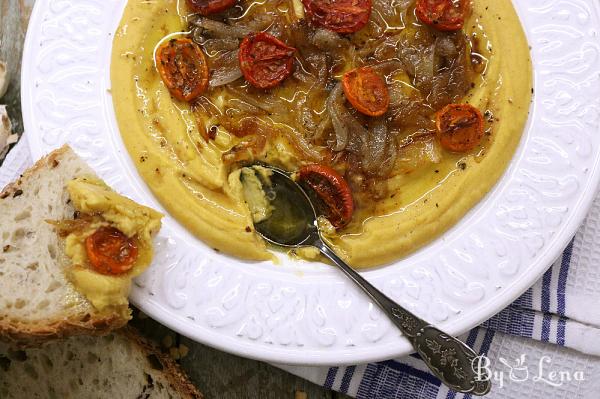
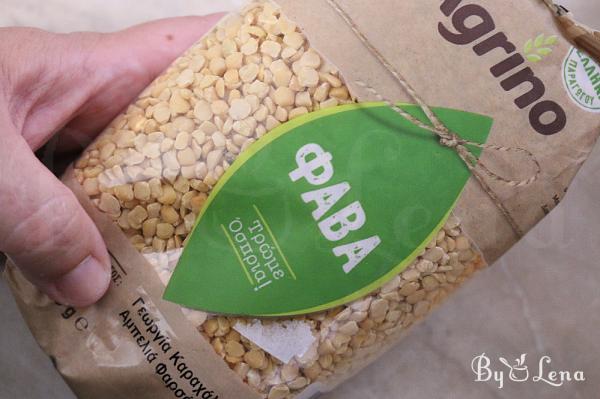
Greek fava is an appetizer made from yellow split peas and can also be enjoyed as a main dish. You’ll find these peas labeled as "fava" in supermarkets and Greek stores (see the picture in the first step). This dish can be considered a "sister" to hummus but with distinct Greek flavors and a unique taste.
My first encounter with fava was years ago in a high-end restaurant in Sithonia, where it was served in Santorini style with caramelized onions and roasted tomatoes. I’ve tried fava in other places since then, but it never quite matched that memorable flavor and texture. In some areas, it's prepared with a simple topping of cherry tomatoes, raw onions, capers, and ground black pepper, resulting in a coarser texture with a more pronounced pea flavor.
This year, I had the fortune of staying with a Greek hostess who generously shared her detailed family recipe with me. With a few tweaks, I achieved that creamy taste and texture I fell in love with.
I highly recommend this fantastic recipe. I am delighted to share it with you and extend my gratitude to Eleni for her invaluable advice and those wonderful discussions by the sea!
This is how dried Fava peas are available in Greek stores.
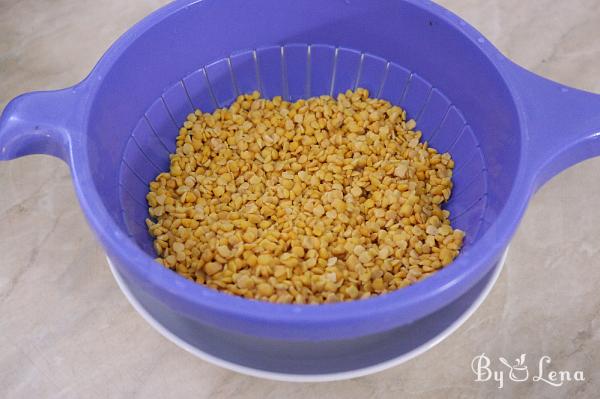
Measure 1 cup of dried peas, place them in a sieve, and rinse thoroughly under cold running water.
Let them drain for 5-10 minutes.
Since Santorini-style Fava is my favorite, I caramelize the tomatoes and onions for the final topping. If you prefer, you can skip these steps and use raw onions and cherry tomatoes.
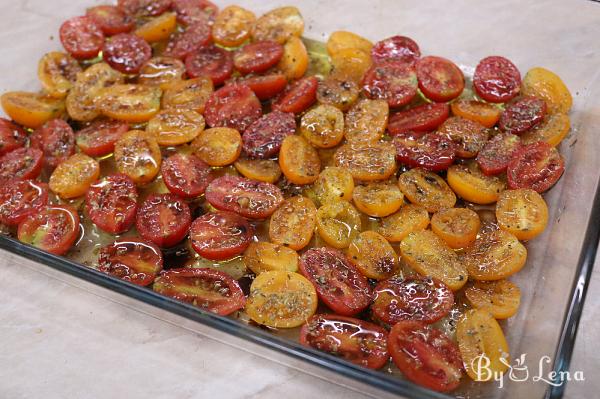
In an oven tray, arrange halved cherry tomatoes and drizzle with 4 teaspoons of balsamic vinegar, 2 teaspoons of oregano, 4 teaspoons of brown sugar, 1 teaspoon of garlic, a pinch of salt, black pepper and olive oil.
Bake in a preheated oven at 180°C for 60 minutes.
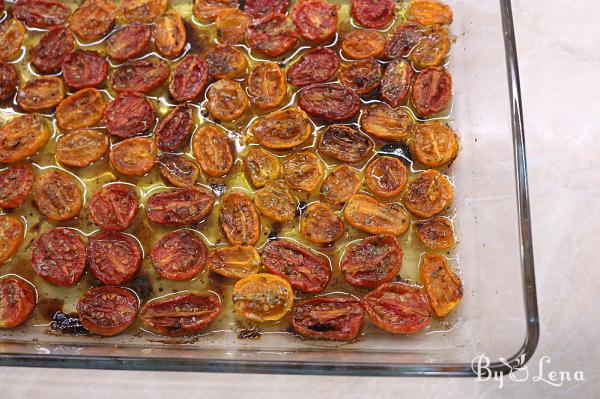
Here is what the finished tomatoes look like.
Remove from the oven and allow to cool.
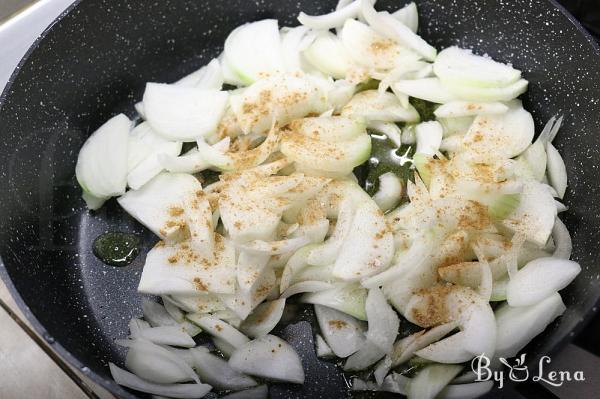
For caramelized onions, slice onions into julienne, add to a pan with about 50ml of olive oil, 1 teaspoon of salt, and 0.5 teaspoon of cinnamon.
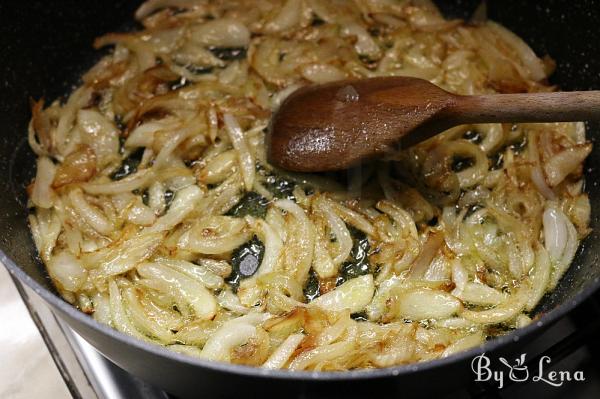
Cook on medium heat, stirring occasionally for 15-20 minutes until onions are evenly browned.
Let cool.
The peas should be drained by now.
In a thick-bottomed pot, heat 50ml of olive oil, add the peas, and sauté over medium heat for about 10 minutes until slightly nutty aroma.
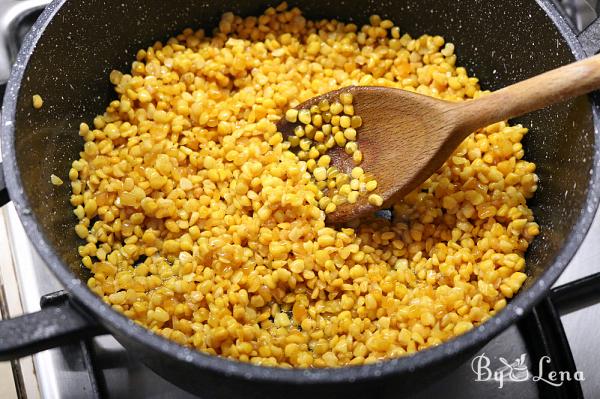
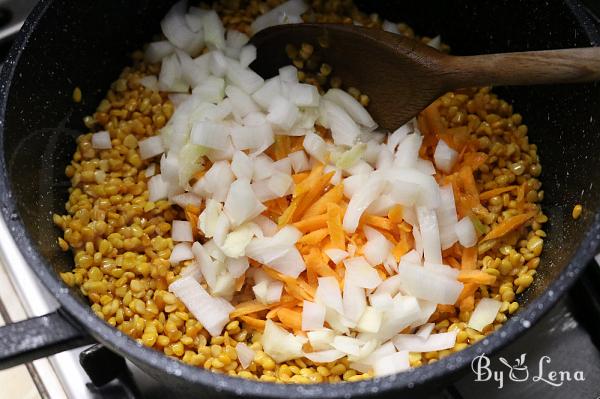
Add 1 diced onion, 1 grated carrot, and 2 sliced garlic cloves.
Mix well and simmer for another 5-10 minutes until they become soft.
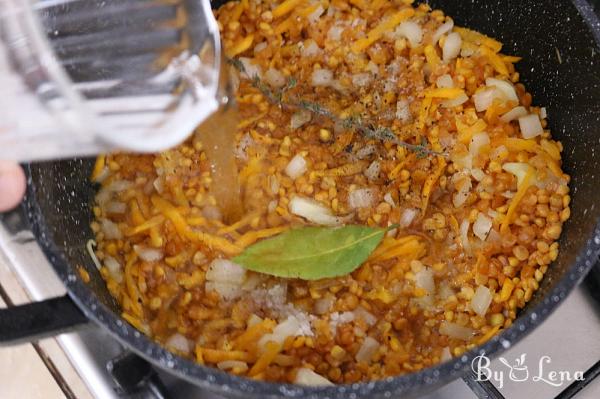
Now, add 0.5 teaspoon of salt, a touch of black pepper, 1 bay leaf, a sprig of thyme, and a sprig of rosemary.
Pour in 2 cups of cold water and mix.
Bring to a boil, then reduce to low heat, cover with a lid, and simmer for 50-60 minutes.
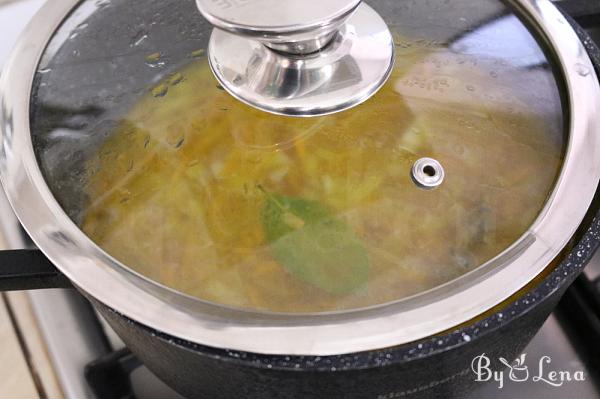
Check if the peas are tender. Stir adding a little hot water if needed.
The amount of water required might vary depending on the pea variety and absorption rate.
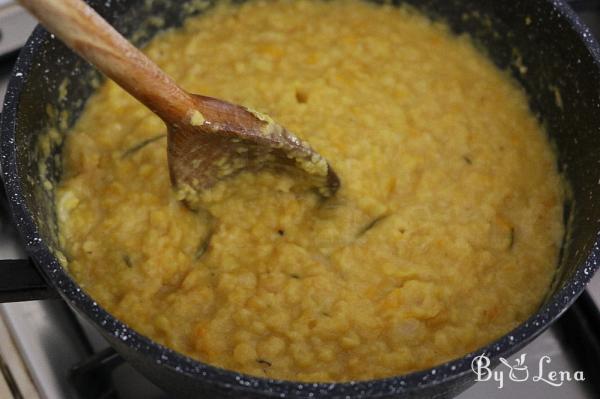
Remove the bay leaf, rosemary and thyme sprigs. Add the juice of one lemon.
Consider transferring to a bowl if you wish to avoid damaging your pot's coating.
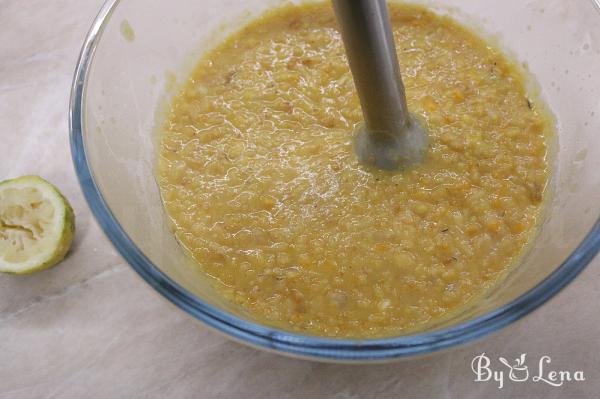
Blend the mixture until smooth and creamy. It may seem runny, but it will firm up as it cools.
For a rustic texture, mash with a fork. However, I prefer the creamy consistency of fava.
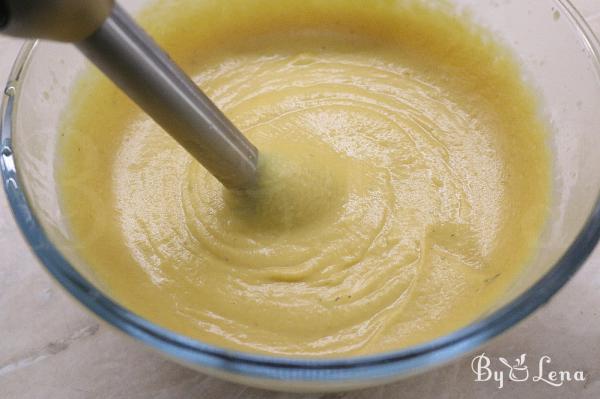
Traditionally, fava is served on a flat plate, spread about 1cm thick.
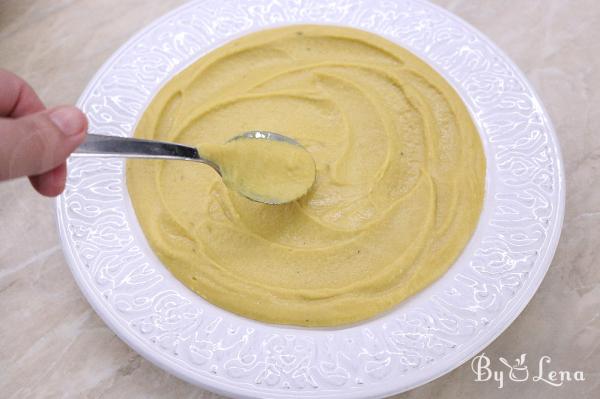
Top with halved cherry tomatoes (plain or caramelized), caramelized or raw onions, capers, black pepper, and olive oil.
Serve as an appetizer or main dish. In some restaurants, it's accompanied by grilled octopus.
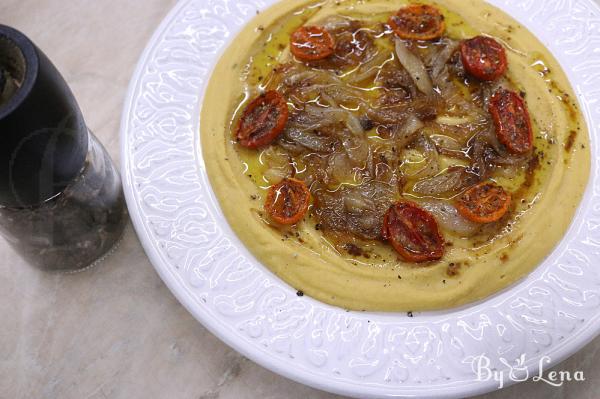
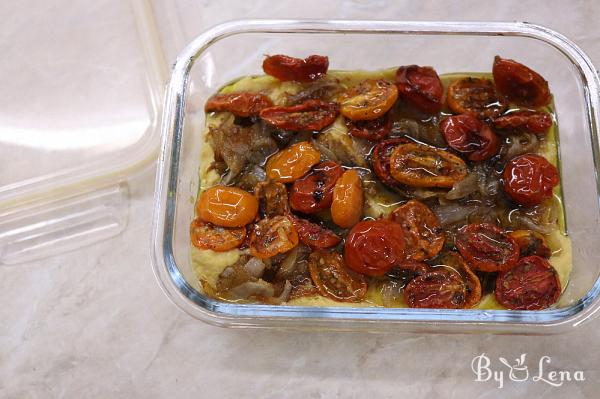
For casual meals, store in a casserole. Top generously with caramelized onions, baked tomatoes, and black pepper.
Cover and refrigerate for a few hours to marry the flavors.
Serve with bread, pita, or your favorite side. It’s truly delightful!
Enjoy your meal!