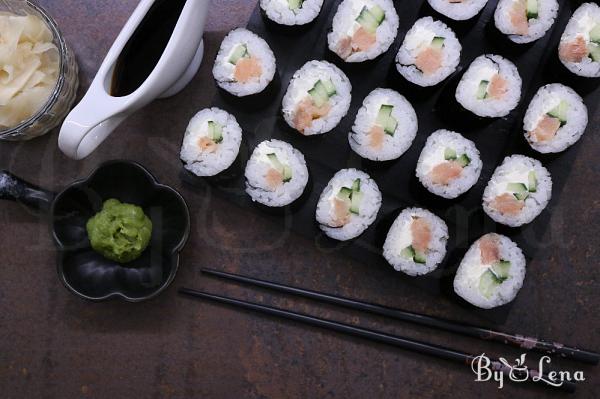
Sushi Maki Philadelphia
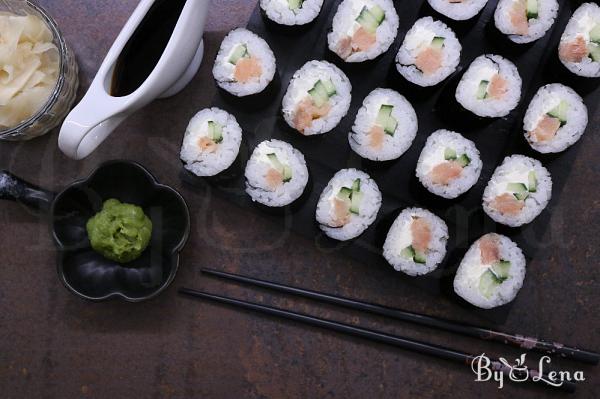
Begin your sushi journey with this Sushi Maki Philadelphia recipe, a simple yet popular sushi variety loved by all, including children. Initially, my daughters only wanted Philadelphia sushi, but as we progressed, we've discovered many other favorite fillings. Before you start rolling sushi, make sure to carefully follow the guides on how to cook Sushi Rice and the rest of the Sushi Basics.
Sushi Maki is the classic sushi type with visible seaweed. I always recommend starting with them to learn rolling techniques and get comfortable working with rice. If you follow all the steps below carefully and consistently, I assure you’ll achieve success on your first try and boost your confidence in making sushi at home!
Cook the sushi rice as per the instructions here - Sushi Rice.
Allow it to cool for at least 2-3 hours before rolling.
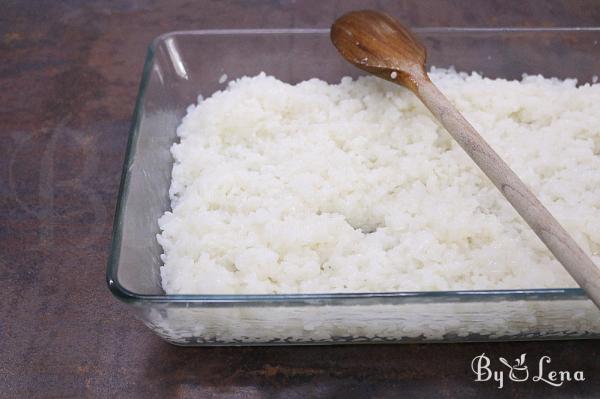
Then, see all the instructions in the section with other Sushi Basics.
Roll out the bamboo mat, prepare gloves and water, nori sheets, and filling.
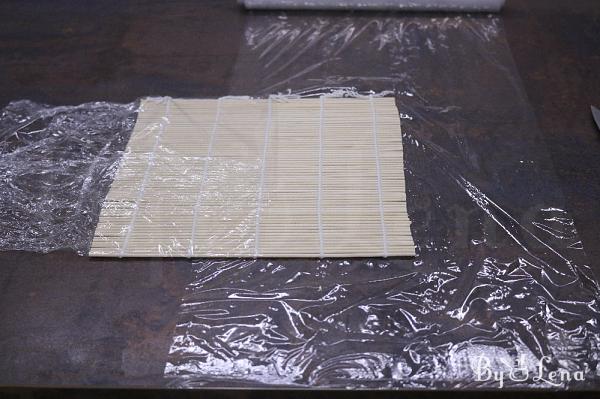
For Maki Sushi Philadelphia, we use cucumber, salmon, and cheese as fillings.
Wash the cucumber (long variety) well, and then split it in half.
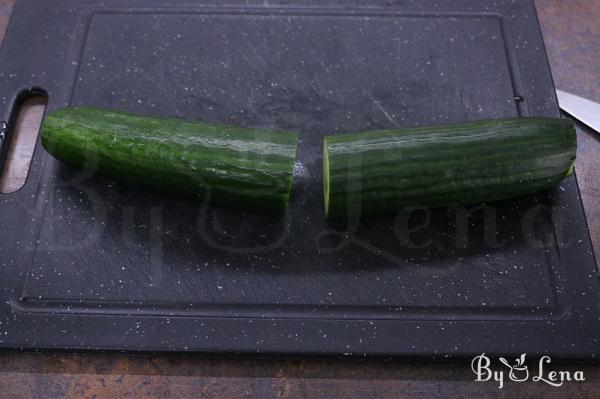
Slice each half lengthwise into quarters.
Use a small knife or spoon to scoop out the seeded pulp from each quarter.
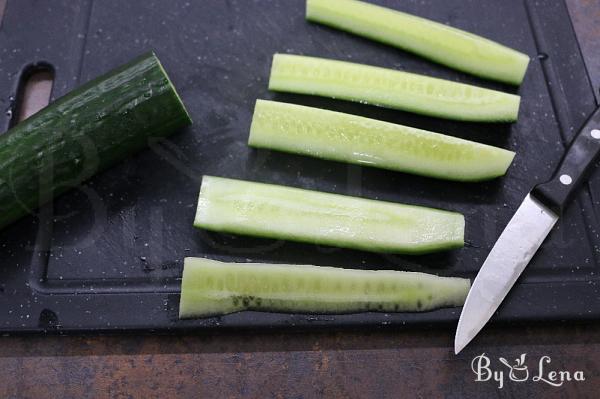
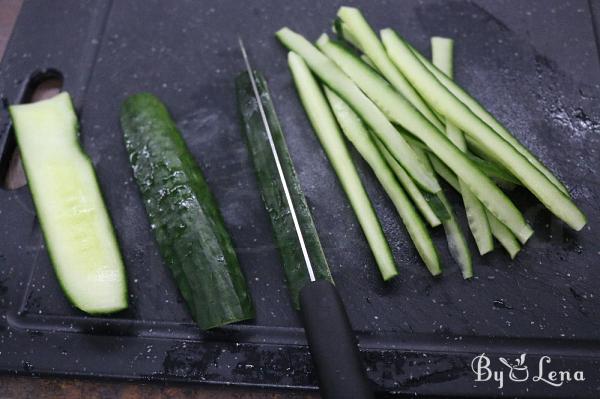
Then, slice the remaining portions thinly lengthwise, as shown in the photo.
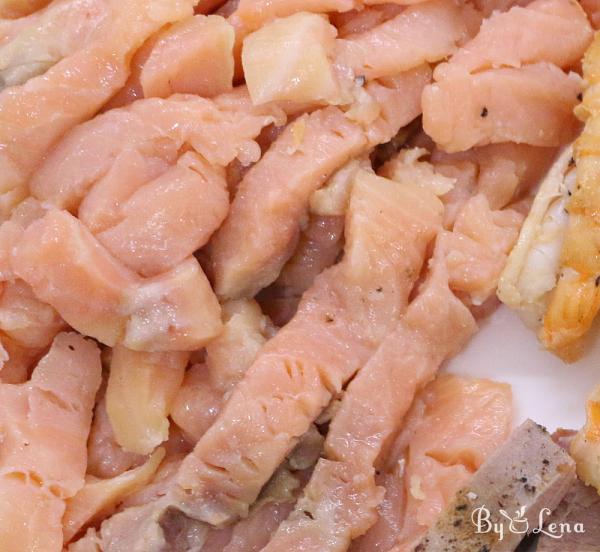
Slice the salmon into strips about 5-7mm thick (similar to a pencil's diameter).
I prefer using marinated salmon (store-bought or prepared using the Gravlax recipe), previously frozen and thawed for safety.
It’s advisable to freeze and thaw fresh or smoked salmon for safety, a tip recommended by sushi experts.
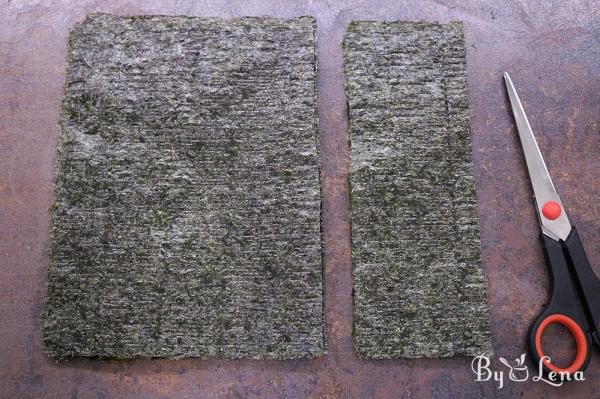
For any type of Maki Sushi, it’s advisable to cut nori sheets to 2/3 of their size. This size makes rolling manageable without excessive seaweed in the roll.
Use the leftover 1/3 for smaller sushi, or another type I’ll introduce later.
Once everything is ready, the rice cooled and fillings prepared, let’s begin rolling the maki:
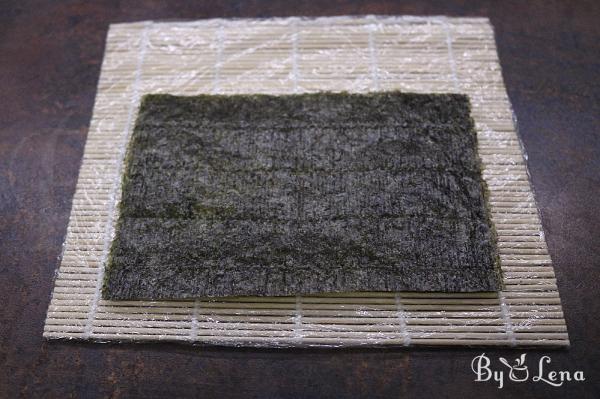
- Place a 2/3 nori sheet on the mat, rough side up.
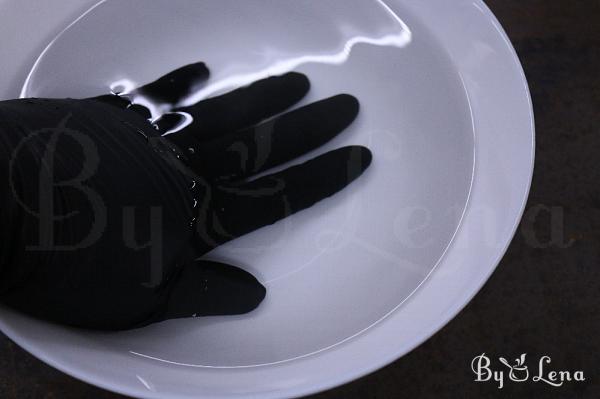
Wear gloves if using, and dip your hands in the cold water bowl.
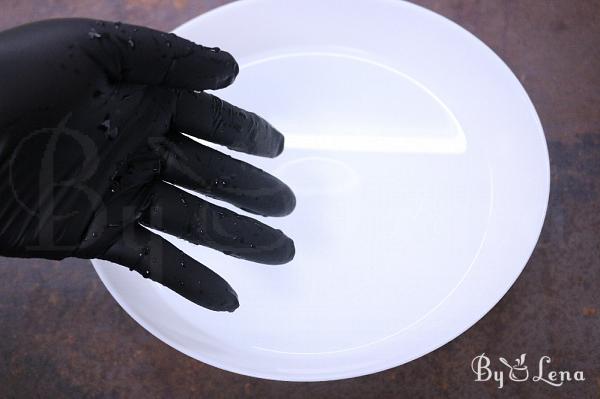
Remove your hands from the bowl, shaking off excess water. Hands should be damp, not dripping.
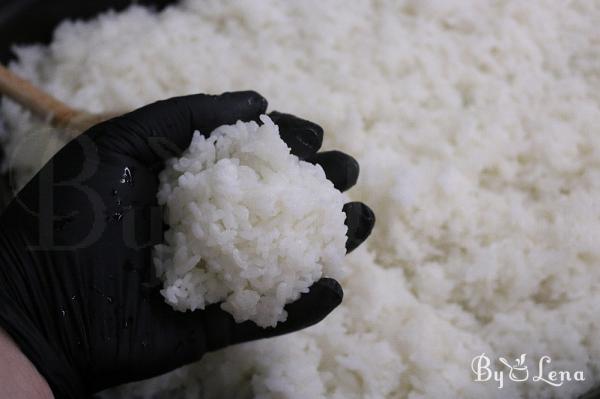
Grab a rice portion about the size of a snowball fitting in your palm. Don't shake, shape, or press it—just grab it!
Sushi rice is very sticky. Handle it gently to avoid difficulties in working it.
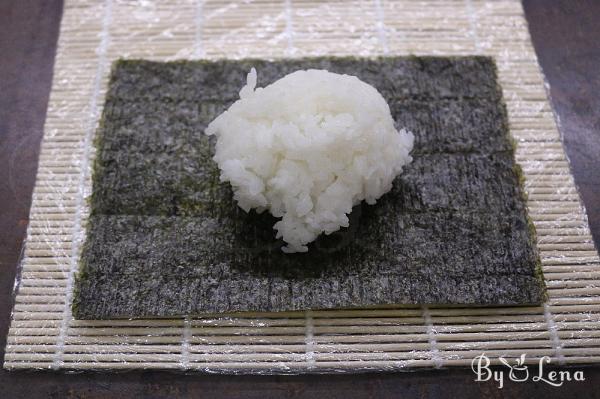
Place the rice ball in the center of the nori sheet.
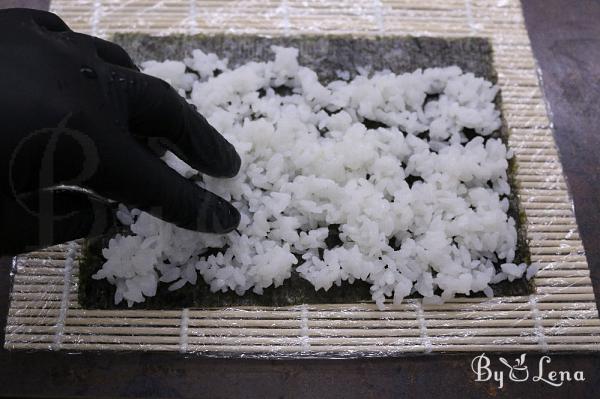
Lightly moisten your fingertips and gently spread the rice, without pressing, across the sheet. Even distribution is key without leaving large gaps.
Leave a 2 cm margin at the sheet's end uncovered, as seen in the next picture.
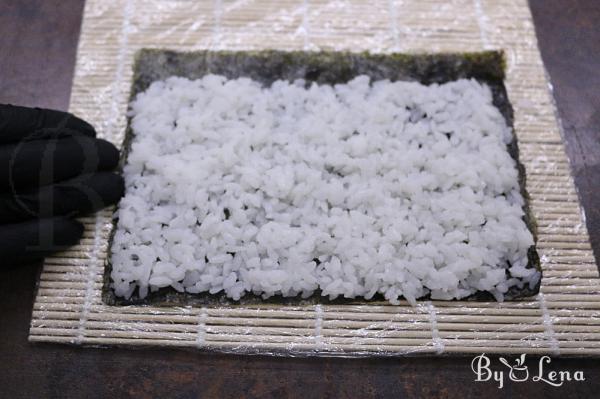
Once the rice is evenly spread, lightly press it with your fingers to ensure it's almost fully covering the nori sheet.
The end margin remains without rice, while the rest of it should align with the seaweed sheet's size. Remember, dampen only your fingertips and shake off excess water to prevent wetting the rice.
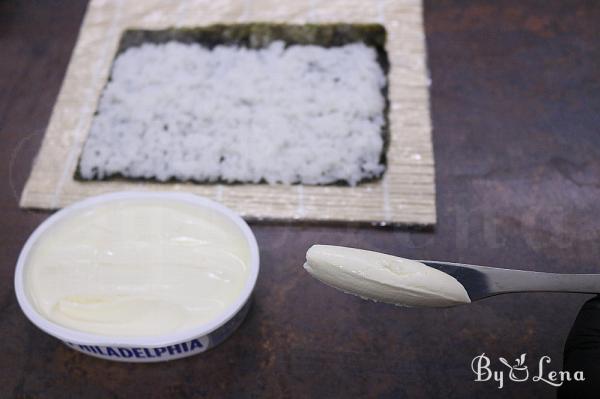
Take a small amount of cream cheese with a butter knife, as shown in the picture.
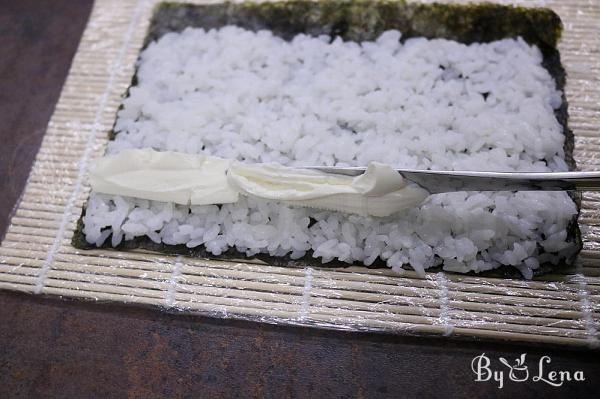
Carefully spread it along the rice's edge until covered entirely along its length.
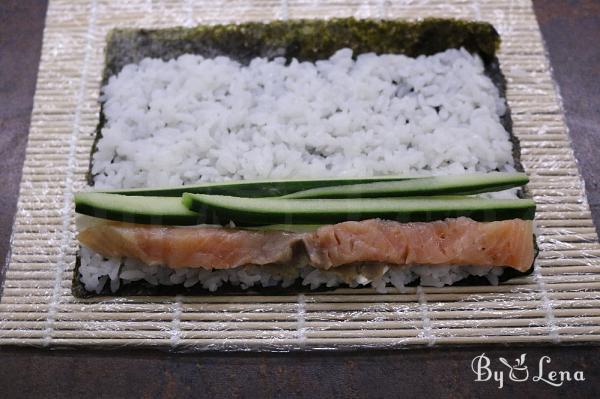
Lay salmon and cucumber slices over the cheese, but don't overfill!
For initial rolls, minimize filling to simplify rolling and facilitate understanding the process.
Use the mat to start rolling the sushi:
- First, roll until the filling is enclosed.
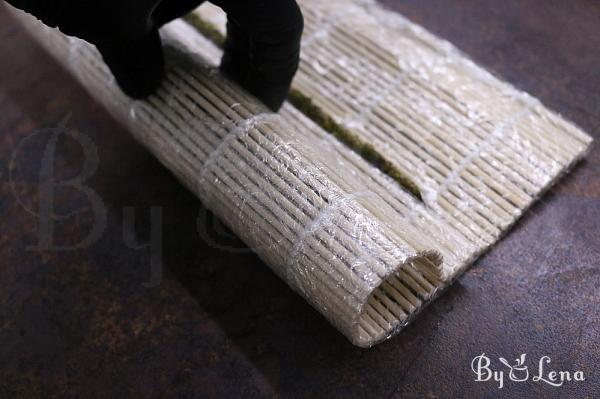
- Quickly moisten the nori sheet’s end with no rice using a finger.
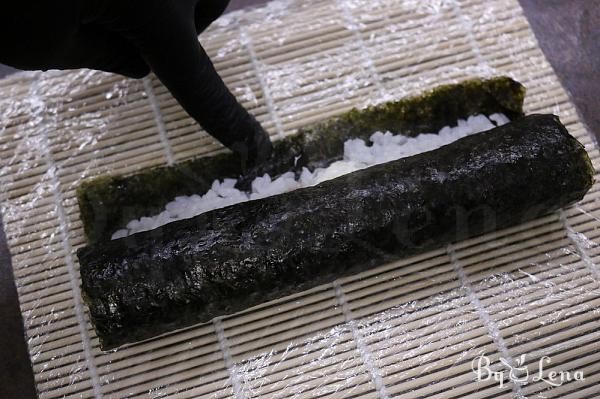
- Roll again until the roll is sealed;
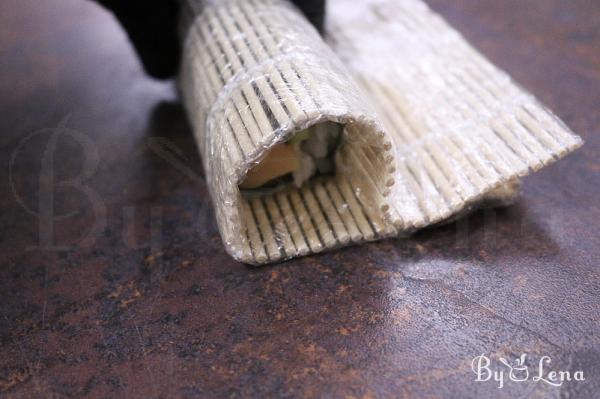
- This forms an initial roll needing refinement;
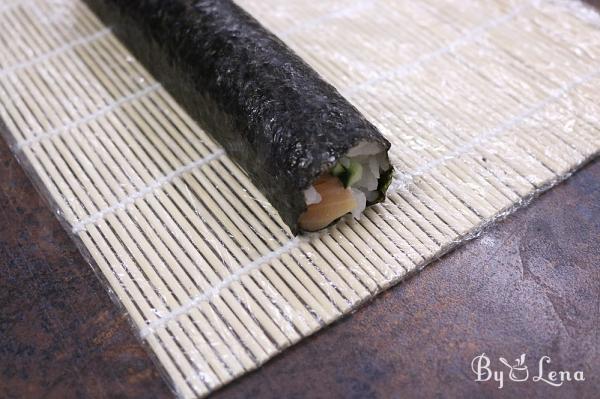
- First, press and straighten the edges by positioning it on each end over the mat’s edge.
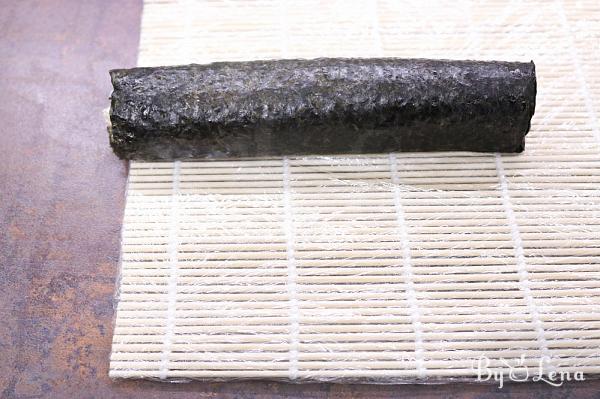
- Cover with the bamboo mat and press firmly with your fingers to secure the filling inside;
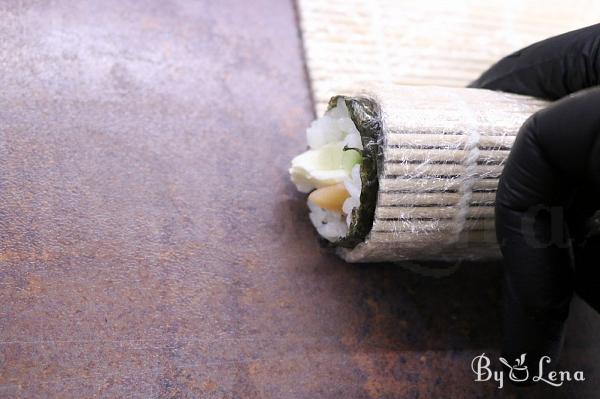
- Repeat the same on the opposite edge;
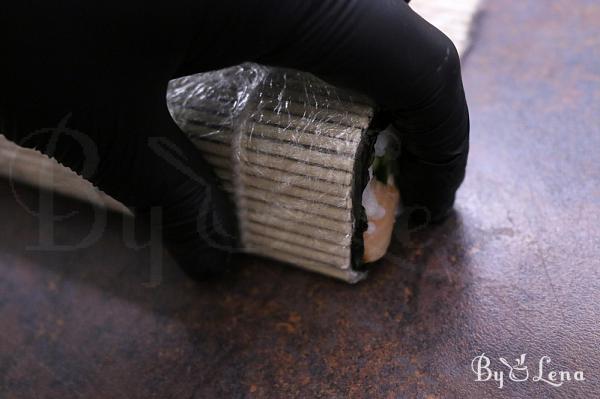
- Finally, wrap the entire roll in the bamboo mat again and press well, smoothing it to ensure everything is secure and evenly compacted.
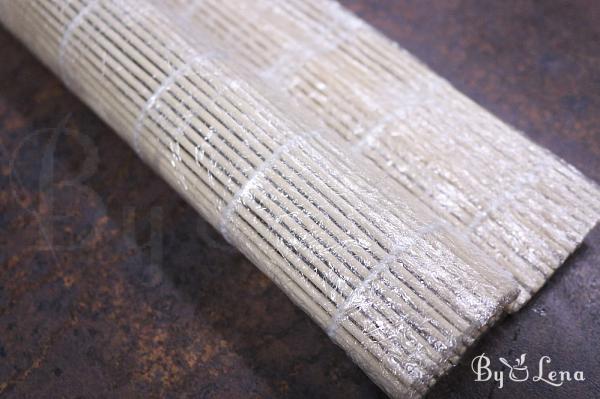
Place the formed rolls on a platter as you shape them.
Typically, a 500g rice portion yields 10-12 maki rolls.
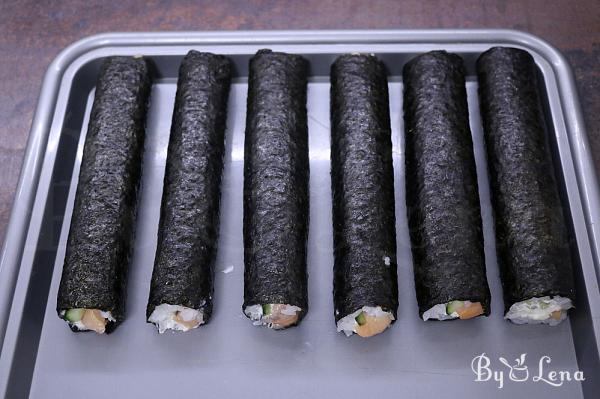
Store uncut rolls in the fridge until you need them.
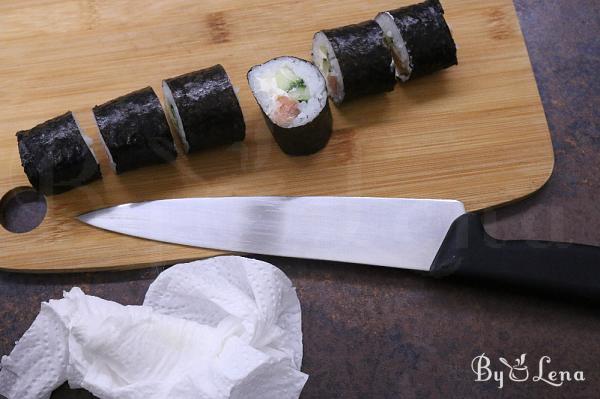
Before serving, slice them, typically with a sharp knife, cleaning it with a napkin or washing it after each slice.
Cut each roll into 6 uniform pieces and arrange on the platter.
On a side note, refrigerated rolls are easier to slice as the rice becomes less sticky, reducing the need to wash the knife after every cut.
Serve with soy sauce, pickled ginger pieces, and a hint of wasabi; it’s delicious!
Enjoy your meal!